
















 roper raptor disease diagnosis and management is a critical part in maintaining a healthy bird. You may trap a bird that is in poor health or infected and not have it manifest the symptoms until later. Or you may have a bird that catches something either from prey, from a food source, or from the general environment. Sometimes a bird has a simple infection and not a complex disease. Many birds have eaten sharp bones that have nicked the skin around the mouth. If this inflames or becomes infected, it may have some appearance to Frounce, yet require a different treatment. White spots are quickly identified as Frounce, but can also be a Vitamin A deficiency, capillaria, pseudomonas, or candida. A good veterinarian familiar with birds, and raptors in particular, can be difficult to find, but there are many great ones available. If you don't have a veterinarian you know of and can access in an emergency, I would suggest asking around to at least have a name on hand. Few facilities will rival the Abu Dhabi falcon hospital, though, http://www.cnn.com/2010/WORLD/meast/06/10/falcon.hospital.uae/index.html.
Symptoms of disease that warrant a veterinarian's opinion are diarrhea, discolored mutes, discharge from the nares, any off smell, or off behavior. To judge any "off smells", put your bird in her hawk box and place that in a small enclosure such as a bathroom or the car. If after a few hours you can smell a strong smell, this is a sign of abnormal mutes or castings. The five most common raptor diseases are Frounce, asper, coccidia, sour crop, and Bumblefoot, however it is important to recognize the vast array of other diseases that can impact your raptor, of can impact you or your other animals. Small birds may always be a few hours from death if they do not get proper nutrition making any symptom a cause for alarm. Large eagles sometimes go weeks in the wild without food and can be observed for a day before acting on symptoms. Longer term chronic issues can be seen which are not immediate threats to her life, but are degrading her overall condition.
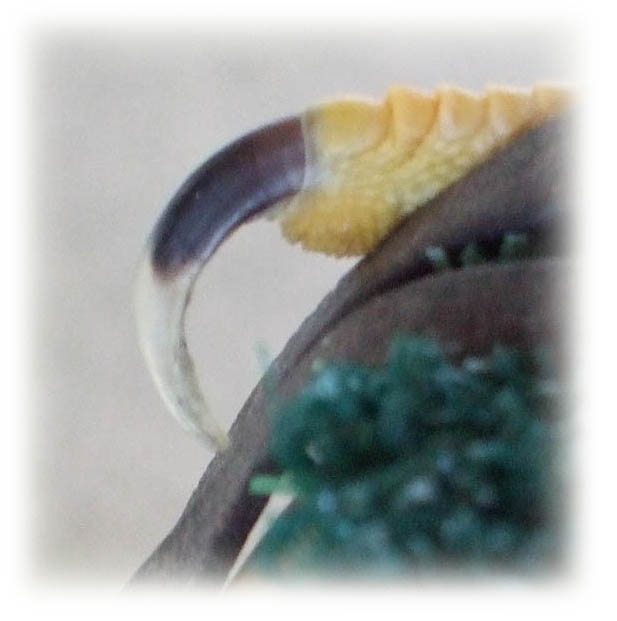 |
This bird's talon shows an off color which is believed to have been caused by a nutritional deficiency. The normal colored talon growing in shows she is recovered. A note that not all white talons are signs of nutritional deficiencies. As an example, the Northern Spotted Owl has light colored talons. These birds naturally hybridize with the Barred Owl, which has black talons. The hybrid offspring have black talons. |
A small note about antibiotics. No antibiotics are completely safe. Anything strong enough to help can also be strong enough to harm. Antibiotics tend to eliminate beneficial bacteria in the system, and many will feed quail with guts intact after a round of antibiotics to help restore the gut flora. Others supplement with Benebac or another lactobacillus preparation to replace the gut flora. Antibiotics like Baytril can be nephrotoxic, particularly in young birds. (Baytril is commonly used at about 10 mg injected into the leg muscle once or twice a day. Baytril given orally can cause anorexia in falcons.) Panacur can easily overdose a bird, and I have heard not to use it during a moult. Antibiotics should always be determined and dosed by somebody knowledgeable and experienced. Antibiotic use can also frequently be followed by a yeast infection, so something to be aware of through treatment.
Diarrhea is a symptom of many diseases and knowing what your bird's mutes look like for typical meals and various foods will help you identify atypical mutes. Red or black diarrhea indicates digestive problems. Red diarrhea may indicate bleeding from the lower digestive tract. Black diarrhea may indicate bleeding from the upper digestive system. Green diarrhea indicates problems with the liver, the green reflecting the bile that is being passed through. A small greenish mute does not indicate liver problems, but rather an empty crop, the green again reflecting the bile production. Just because the mutes do not look as you expect them to, that alone is not usually evidence that there are significant problems. Watch your bird's behavior as well to determine what is happening.
To take a fecal sample, lay wax paper down around your bird's perch, or line the inside of her hawk box with wax paper and place her inside. Be aware that the mutes will not dry normally and will slide all over, so either line the edges with paper towels or do not move the box. Once a few samples are available, these can be placed into a ziploc bag for the veterinarian. You want the stool part of the fecal, not the urate. The point is to not let them dry. Fresh samples are best, and likely some will be available at the office, but having back-ups on hand makes sure you will have samples.
Your veterinarian will do a fecal float with the material you provide. Some very knowledgeable falconers and rehabilitators may decide to self-diagnose. You will need a microscope that can magnify 10x and 40x, slides and coverslips, fecal floatation solution (such as Fecasol), and pictures of the commonly seen parasites to compare against what you see through the microscope. A good guide on how to perform a fecal float and what to look for in the field can be found here: http://www.finchaviary.com/Maintenance/FecalSmear.htm
Keep in mind that the bird is a system. Just because something is at a low level of infection (i.e. round worms), they are taking energy away from the bird and dumping toxins into the bird preventing her from using that energy to fly harder, build muscle, or moult. The bird may feel this and feel under-equipped to hunt well. The worms themselves are also dumping toxins back into the bird's system and weakening her defenses against other invaders.
AvianWeb Medical Drugs (for pet birds, but a good set of information to consider): https://www.beautyofbirds.com/medicationsexotics.html
Recommended raptor veterinarian list
Raptor Diseases and Maladies
ApoplexyApoplexy is marked by an uncontrollable jerking or contraction of the muscles typically caused by hypoglycemia, Vitamin B deficiency, calcium deficiency, and Vitamin D3 deficiency. Although the hypoglycemia is usually the trigger for fits and the immediate solution for treating, the full nutrition and fitness level should be evaluated. Typical in freshly-trapped small Accipiters such as Sharp-Shins and Cooper's hawks, but also can occur in captive birds.
Treatment is usually placing the bird in a cool, dark place and administering a sugar-water substance - Gatorade, Pedialyte, and even orange or cherry juice can be used to try to balance the hawk's electrolytes. Three or four eye-droppers full of flat cola (not Diet or non-sugar) every two hours will also start to treat the condition. Nutrical is a good additive for this bird until she is past this.
Aspergillosis
Aspergillosis, or Asper, is a fungal infection and the most lethal type of infection, and in particular the arctic birds tend to develop and die from this. Gyrfalcons, Goshawks, and Snowy Owls in particular are susceptible. This can be of two forms. Nodular asper attacks the air sacs, lungs, and trachea. Systemic asper attacks the kidneys, liver, or other organs. The fungus that causes asper, Aspergillus fumigates, is found everywhere except the frozen arctic and Antarctic regions; birds are constantly exposed to it. Elevated levels will be found in areas where there is carpet, wet or damp substances, or materials that promote the growth of fungus such as burlap, hay, or straw. Fecal matter and dead vegetation (straw and shavings) should be kept to a minimum in any aviary enclosure. To contract the disease the bird usually has a depressed immune system either from another disease, poor health, extended antibiotic usage, or poor nutrition. Arctic birds, such as the Gyrfalcon, are more susceptible to Asper than some other species (Goshawks and Golden Eagles, particularly). The earliest sign of asper is a slight gurgling behind the breathing or a slight hoarseness behind any voice. Asper's hallmarks are difficulty breathing (although this may not be apparent), extreme thirst, easily over-exerted and low in energy, food flicking or difficulty eating or lack of interest in eating, weight loss or poor appetite, voice change, and a general ruffled appearance. Sometimes there is a stinky black fluid thrown up by the bird. Despite the bird's extreme thirst, dehydration occurs. This can be clinically confirmed by high white blood cell counts, tracheal cultures, ELIZA test, and x-rays. An upper respiratory problem can sometimes be nailed down when difficulty exhaling is observed, whereas a lower respiratory problem may be involved when trouble inhaling is observed. Asper and pneumonia look a lot alike. Birds often have asper in their system at a low-level of infection that is not obviously hindering their health. Something can set this out of balance and trigger a decline in the bird's health. However it can be dormant in the bird for a long time.
The best treatment for asper is prevention. Although birds may recover, this is a highly problematic disease to treat. Veterinarians may prescribe AmphotericinB with Clotrimazol, Itraconazol, Fluconizole, Voriconazole, Ancoban, Flucytosine, Sporanox, or Intracon (a note to be careful in handling AmphotericinB as it can cause renal problems in humans). A nebulizer with 2cc clotrimazole with 1cc sterile water or clotrimazole 10mg/ml in polyethylene glycol (Lotrimin solution) for 30 - 60 minutes for 5 days is one modern treatment. Another favored treatment is Terbinafine once a day for 60 days. Continuing to gently exercise the bird, but not to the point of being winded, may help to clear out the lungs and keep the lymphatic system moving. Birds treated for Asper should be monitored for 6 months to verify that the bird has completely overcome the infection and is not going to relapse. Steve Layman has an innovative treatment that has been used on several birds and is under clinical experimentation. This can be used both for birds known to be infected and as a prophylactic treatment. He should be contacted for the full regimen.
An alternative treatment devised by Steve Layman has been tested with many falconers and rehabbers. The hypothesis behind this is that the needles of conifers have chemicals that destroy aspergillus fungus. These chemicals are specifically in a group called terpenes. These are highly volatile meaning they are effective for a short time before they are broken down. In lab trials of asper in culture media, these terpenes have shown aspericidal effects. Steve created a protocol that tries to maximize getting these terpenes into a bird's system to destroy the fungus without negatively impacting the bird. It requires fresh conifer needles several times a day to, essentially, be aerosolized in a concentration that will help when the bird breathes it in. Steve's tried many different ways of doing this as have many others. Here's a few of the findings.
Others have experimented with a nebulizer setup of using steam to help aerosolize the active chemicals from the conifer needles. Some have used nebulizers grinding down the needles until there's some liquid, mixing that with an equal amount of saline, and treating a hawk with a nebulizer using that mixture as well as keeping fresh crushed needles in the hawk box.
Some asper is so far gone that even when it starts breaking down it causes problems. Treatment of birds that are too far gone can appear to speed up decline when death is imminent. Through the treatment, watch the color of the mutes. At first it will often be that bright green color, as the infection gets worse, the urates may turn brownish colored. A bird can succumb to Asper in anywhere from 2 days to a week. Only 25% of patients will recover.
https://www.animalgenetics.us/Avian/Disease_Testing/Aspergillus.asp
https://www.aspergillus.org.uk/content/aspergillosis-avian-wildlife
Avian Influenza
Avian influenza isn't typically seen in raptors, however since the typical host are ducks and chickens, raptors can be exposed to this.
Blackhead
This is a disease that affects turkeys and chickens in commercial poultry, but could develop in a raptor. The cause is a protozoa and can lay dormant in the ground for years. Birds that are infected give a watery yellowish mute. The bird must be removed and the area cleaned to prevent others from developing this.
Blockage
Although not a disease, this may be mistaken for one. Some birds are quite greedy and will manage to swallow more than they should. My own Red-Tail can swallow an entire rabbit front leg from toenails to shoulder blade without bothering to strip the meat off of it. These birds must be watched carefully should they manage to swallow large connected segments like this to ensure they put over the crop correctly passing food on through, and cast appropriately. Care should be taken to not feed on top of a difficult crop of food like this.
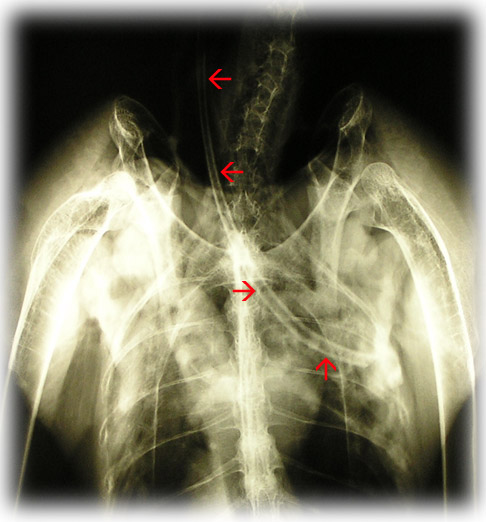 |
An x-ray of an eagle that was discovered to have a deer rib lodged in her crop.
We had an eagle that would wheeze if exercised (like - caught), but seemed ok otherwise. We saw something strange in the xray but couldn't figure out what it was. One day we had him on the table, and the vet felt a strange lump on the back of his neck and saw that something was breaking through the skin. He pulled on it and out came a deer rib! Image courtesy of Chris Maack and the Bird Treatment and Learning Center. |
Bumblefoot
Bumblefoot is a disease of the bottom of the feet caused by any number of different types of bacteria. Birds have an amazing ability to heal their skin, but unfortunately it can end up encapsulating bacteria and allow the colony to continue producing. In the case of Bumblefoot, the bird has sustained an injury, however small, to the bottom of the foot and bacteria has been allowed to take hold. The skin may continue to heal around this colony. It begins as a small, hardened corn which develops into a fevered hot spot or open sore. Other symptoms are a bird who lays down or won't put weight onto the feet. This corn, or a spot on the foot skin, is usually an early sign of Bumblefoot when it can still be reversed relatively easily. Untreated, Bumblefoot doesn't just impact the foot and her ability to stand comfortably, it can devolve into septicemia and even kill a bird. Falcons appear to be particularly sensitive to Bumblefoot, possibly from the way they strike prey.
Like Asper, the best treatment is prevention. The main causes are from injury (i.e. improper furniture design or enclosure injuries or from prey), perching surfaces (i.e. improper surfaces or design), poor hygiene, inactivity, obesity, and poor diet (particularly an insufficient amount of Vitamin A). Having proper perching surfaces, varied surfaces, and varied diameters of perches is the best maintenance. Keeping perching surfaces clean is important - this means clean from mutes as well as cleansing agents which may irritate the skin. The area around the perch is important, too. Birds perched on hard dry ground, or hard icy ground, are likely to bate, damage the foot skin, develop a crack and allow infection to set in. Proper nutrition is key. Soaking or scrubbing the hawk's feet once in a while or if soiled helps to prevent dirt and blood from becoming encrusted. Some have reported a mixture of glycerine and rosewater sprayed on the feet occasionally helps keep them in good shape. Hoof Saver by Farnum is another good treatment and can protect the bird's feet during extreme cold and dry periods preventing cracks from forming and becoming infected. Keeping the skin under the talon where it meets the talon clean is another good step. Any injury to the bottom of the foot can allow bacteria to take hold. Gyrfalcons, Cooper's Hawks, and Prairie Falcons are observed to particularly develop these problems, possibly due to the way they strike their prey. Gyrfalcons tend to bate a lot and that may also be why they develop Bumblefoot more. Keeping them on softer ground where they cannot bruise the foot can help.
If a bird has developed a corn, scrubbing the foot with a Betadine scrub is a good place to start. This can be rinsed with Nolvasan, if you have it. Soaking twice a day in a warm Nolvasan solution can also be highly beneficial. Using a salve of 1 part Anhydrous Lanolin mixed with 1 part Dermaclense or an antibiotic ointment like Corona (very tiny amounts massaged in FULLY) can quickly revert any small problem. A slightly more progressed case can use Preparation-H massaged into the foot (NOTE: Canadian falconers are at a distinct advantage as their version of Preparation-H has higher levels of active ingredients than the US version). Many rehabilitators also use a CEH cream preparation. A cracked callus which could develop further into infection can be treated less aggressively with foot soaks every other day (Nolvasan would be one choice for a foot soak solution), CEH cream, and wrapped with Tegaderm and VetWrap. If necessary, the foot can be covered with rolled gauze then covered in vetwrap to keep the cream on the foot and off the feathers. Another treatment attributed to the highly knowledgeable and experienced Dr Redig calls for 5 cc DMSO, 1 g piperacillin (can use ticarcillin, or amoxicillin if nothing else is available), 3 cc distilled water, and 2 cc dexamethazine (or Banamine in 50 mg/mL). Applying this mixture 4-5 times a day to the affected area is highly effective with moderate cases. It is even good for prevention, such as when a bird has punctured her foot and opened the possibility for Bumblefoot. Very serious cases require taking the pressure off the infection part of the foot, which can be done with donut bandages or with a product such as Sideline, a Sole Support Impression Material. This is like a modeling clay allowing you to create a foot impression and create a sort of orthopedic shoe that can then be wrapped to the bird's foot with VetWrap. More serious cases can require surgery. Advanced cases of Bumblefoot are very difficult to cure. Another topical treatment can be made of:
- 3 cc distilled water
- 5 cc DMSO
- 2 cc dexamethasone
- 1 g piperacillin (or ticarcillin)
Treatment beyond topical and supplemental Vitamin A may consist of Piperacillin or Ceftazidine. Treatment for extreme (Grade V) may require amputation or euthanasia as the bacteria will actually eat the bone.
Proper foot maintenance
Candidiasis
Yeast infection. Symptoms include plaques in the mouth (easily mistaken for frounce, capillaria, or Vitamin A deficiency), lack of appetite, vomiting, dehydration, and depression. Treated with Nystatin, Fluconazole, Itraconazole. This may be observed following antibiotics.
Capillaria
Capillaria is also called Small Roundworms typically picked up from crows or small birds. These roundworms, Capillaria amulata, embed themselves in the lining of the esophagus, crop, or small intestine. Typically, a very low level of these is seen. As they are very difficult to get rid of, unless it poses a problem to the bird's health, the low levels of infestation are acceptable. Some of the marks of this disease are depression, weakness, weight loss, diarrhea, "sitting," coughing, gasping, anemia, excessive salivation, and bad breath. Note that there are two manifestations, one of which looks very much like Frounce.
There is some work being done in Europe to identify a successful course of treatment. This involves Thiabendazole, but is lengthy, stressful for the bird, and not guaranteed. Ivermectin is a preferred treatment in a single dose of about 0.2mg/kg of body weight, but this is not always effective. Fenbendazole/Panacur or Levamasole may also be used to address it. Many vets will advise to leave it alone if there is only a very low level present as it is almost always present even in a healthy bird's system. Unfortunately Fenbendazole/Panacur attacks fast growing cells, so it also can cause new feather deformities. Some vets suggest not to give it until after a bird molts, or is at least done growing in all contour feathers. Other vets do not see the feather deformities as being caused by the Fenbendazole/Panacur.
Chlamydiosis or Avian Chlamydia
Chlamydiosis is also called Avian Chlamydia and is very common in parrots, sometimes called parrot fever. It is caused by an intercellular bacterium called Chlamydophilia psittaci. Symptoms vary from no symptoms with a latent bacteria for months to a sudden death. Some typical symptoms are inflammation of the eye (both the conjunctiva and the cornea), inflammation of the nasal membranes, and shortness of breath. Mutes may be yellowish-green or watery-gray. Can attack the air sacs, the liver, heart, spleen, or brain.
http://www.ncbi.nlm.nih.gov/entrez/query.fcgi?cmd=Retrieve&db=PubMed&list_uids=2241695&dopt=Abstract
http://www.addl.purdue.edu/newsletters/2003/Fall/avchlamid.htm
Coccidiosis
Coccidiosis is a disease of the digestive system caused by a parasitic protozoan. This protozoan appears in two forms, Isospora and Eimeria. Isospora is the form found in Falconiformes and Strigiformes. These develop inside the cells that line the intestinal tract. As they take over more and more cells, the cells begin leaking preventing the bird from absorbing nutrients or liquid. This loss of blood and fluid is what causes the reddish (or red spotty) diarrhea that marks this disease. The loss of blood and fluids can be fatal. Merlins can be particularly susceptible to this and will rapidly decline.
Coccidiosis is usually marked by first by a lack of energy, then diarrhea, dehydration, weight loss or odd fluctuations in weight, lethargy, flecks of red in the mutes or bloody mutes, food flicking, foul smelling castings, and poor appetite leading to complete lack of appetite. The flecks of red in the mutes are blood spots, but sometimes the flecks are small enough to give the mute an overall pink color. If the mutes have turned completely black, then there is a significant amount of blood being passed through the tract and treatment at this stage is less effective. The castings are slimy as though greasy or coated in petroleum jelly, and may be brown and have a different smell. If reviewing your own fecal slides, this can be mistaken for Round worms. Note that these are much smaller than Ascarid eggs.
This is typically treated first by rehydrating, then with antibiotics such as Flagyl (250 mg/10 ml with 3 ml administered TID in food for 7 days), Baycox, Albon (250 mg/5 ml with 0.5 ml administered SID in food for 10 days), Appertex (clazurilum), or Avertex. Once treatment has concluded, Benni-Bac (Avian Lactobacillus) may be a good idea to supplement with as the good system bacteria has also been reduced. Simple foods or an emaciation diet are good to get these birds stable.
Coryza (also called Infectious Coryza)
Bacterial infection that isn't typically fatal, but is difficult to treat. Birds will develop swelling around their faces, discharge from their eyes and nares. They also tend to develop green mutes. Treatment tends to use sulfathiazole and spectinomycin.
Cramp (also called Sprattling)
Cramp affects nestling raptors that get chilled. The chick cannot regulate its body temperature, and therefore is dependent on its environment (parent or incubator) for proper warmth. When the chick gets too cold, the intestinal gut flora dies and the chick's digestive process begins to fail. If the chick still has gut motility, then food will pass through almost undigested. If there is no gut motility, then the food sits in the chick and spoils. Chilling causes muscle contractions and spasms in an attempt to warm the body. This inhibits their ability to process calcium.
Cramp is prevented by using a brooder box, heat lamp, or heating pad. Calcium is sometimes given as a treatment, but if the bird cannot process it, it will not help.
Dehydration
Although not a disease, dehydration is a common symptom and needs to be identified. One way is by pulling the skin of the upper foot away from the body, pinching it up, and noting if it remains tented or returns to the normal shape. Skin that remains pinched and tented is typical of a dehydrated animal. You can also open the mouth to see if there is stringy mucousy liquid across the back of the bird's mouth. If there is, then the bird is dehydrated.
Escherichia Coli or E. coli
E. coli is typically passed from infected birds through mutes and fecal matter. Typical symptoms include ruffled appearance and listlessness, although some birds display no symptoms.
Treatments include antibiotics such as Kanamycin or Gentamycin.
Fluke or flat worms (Trematodes)
Flukes are a very common parasite occurring in many to most wild raptors and usually non-pathogenic. These will be in the mouth, not to be confused with tapeworms which would be further back in the trachea.
Many believe that treating flukes is not necessary if the level of the fluke infestation is not harming the animal (only one or two per slide). Through normal hunting and eating of prey there will likely be a re-infestation. However, if the level of infestation is beyond normal, Praziquintel has been used to successfully treat flukes. Ivermectin and fenbendazole might also be effective.
Fowl Cholera or Avian Cholera
A bacterial disease that is uncommon in raptors, but can occur. There are two forms of this disease: acute and chronic. Acute fowl cholera has a bird with anorexia, high fever, mucal diarrhea and mucal discharge from the mouth and murky greenish diarrhea. The bird tends to have a ruffled appearance and generally dies quickly. Chronic fowl cholera may just be a localized infection in the sinus cavity or the joints. This is marked more by discharge from the eyes, raspy breathing, and a twisted neck (torticollis). This is typically treated with antibiotics and the area the bird has been in needs to be disinfected.
French Moult
In domestic avian husbandry, almost any feather abnormalities or moult is called a French Moult. This could be the bird moulting at the wrong time of year, moulting twice in a summer, or feathers coming in that are misshapen. The causes of this can be nutrition, environmental, depressed immune system, or infectious, most commonly Polyomavirus. An improper moult in raptors has recently signaled the potential of West Nile Virus as misshapen or pinched feathers are now being seen after a bird recovers from a WNV infection.
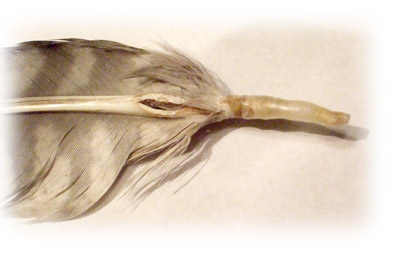
Notice the split in the feather shaft and the malformed shaft near the tip.
Feathers courtesy of Ron Kearney.
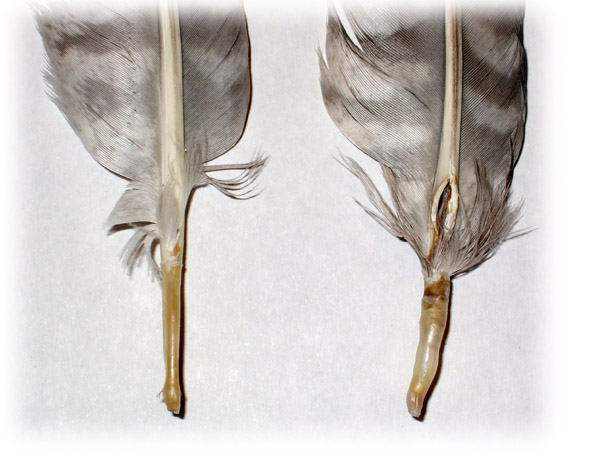
The feather on the left was moulted normally prior to contracting West Nile Virus. The feather on the right was dropped shortly after growing in. The feather on the right is substantially shorter than the normal feather and the shaft is warped and twisted.
Feathers courtesy of Ron Kearney.
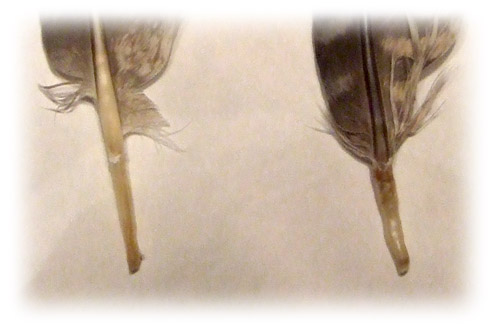
Another comparison of these two feathers.
Feathers courtesy of Ron Kearney.
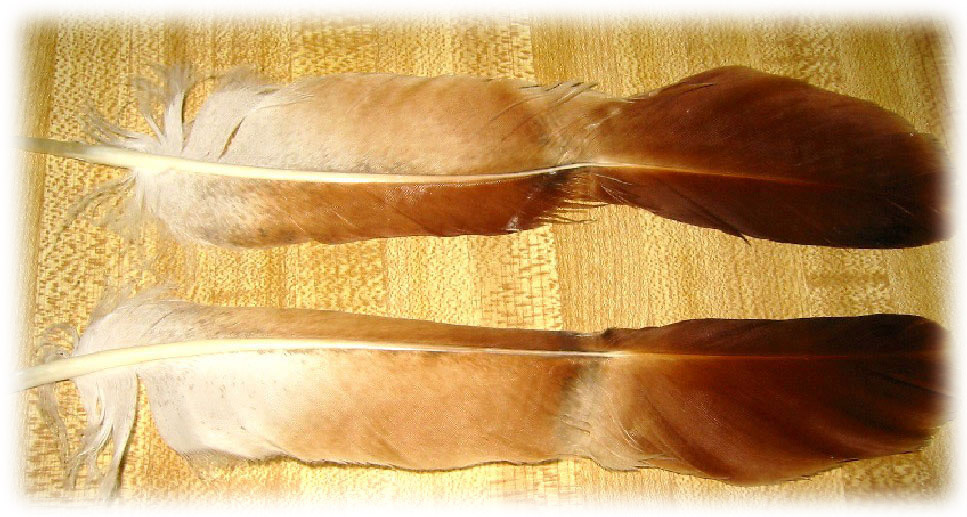
Two feathers from another bird after she survived West Nile Virus infection.
Frostbite
Some birds are very hardy and tolerate cold well. Others, like a Harris Hawk or desert falcon, are sensitive to the cold. Conditions involving wind, rain, snow, and ice can make this worse, and friction along with cold can leave skin irritated. Frostbite can be very mild or extreme enough to cause tissue death and even result in the bird's death. The usual site of damage for frostbite is the foot appearing as pale and dry. Bad frostbite will eventually darken as the tissue dies and will fall off. If this is suspected, immediately bring the bird into a normal living environment where they will be in a comfortable ambient temperature. A foot can be rinsed or soaked in cool to lukewarm water or saline to begin to warm the tissues. Warm or hot water should never be used. The bird should be kept in a warm and quiet environment, should be well hydrated with a balanced electrolyte if possible, and should receive sufficient food. Ensure the tissue is completely healed before the bird is exposed to cold again. If there are open wounds, Neosporin can be used. If there are not open wounds, an Aloe Vera gel or an ointment such as Corona may help encourage the skin to recover.
Prevention is the best part of avoiding frostbite. In cold weather, consider taking up any bathpans or water so a bird cannot get wet accidentally. Make certain that the perching surface is not one that will sap the heat from the bird's feet - sisal or wood is an excellent perch surface in cold whereas metal will draw all heat from the bird's foot. Any tiny piece of metal edge that the bird's toe may accidentally touch can cause significant damage. If a bird tends to bate, the cold skin may not be frostbitten but more irritated from the combination of cold and friction. A bird of this temperament may need to come inside the house at a warmer temperature than a bird that does not tend to cause damage to herself in such weather. Those who keep chickens and other fowl have some practices that may be useful. Some rub Vaseline into their bird's feet both as a protective layer and to massage the blood flow into the tissue. Care should be taken that Vaseline does not get on the feathers.
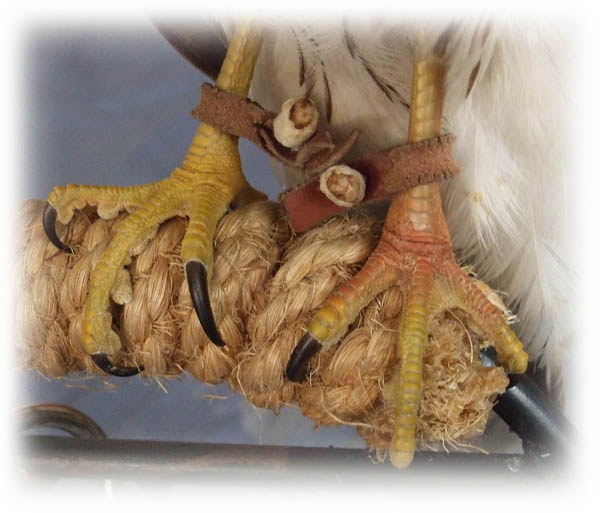 |
While not frostbite, this bird's foot is irritated from bating in a cold environment. Warming her skin and preventing her from bating returned the foot to normal within a couple of days. |
Frounce (or Avian Trichomoniasis)
Frounce is a highly contagious yeast infection of the digestive tract. Frounce is caused by a protozoan called Trichomonas which is frequently present in the crops of pigeons, but can also be in other birds such as sparrows or starlings. For this reason, pigeon heads and crops are generally not fed to raptors, not even after freezing as freezing will not kill frounce. The typical signs of Frounce are white spots in the mouth, throat, or crop, often described as "cheesy" or "white plaques." These alone are not enough to diagnose Frounce as plaques could be candidiosis, capillaria, or even Vitamin A deficiency, but it is one hallmark of the disease. Other signs are head bowing, head flicking, difficulty breathing, or even regurgitation of food. Frounce eats away tissue and bone so it gets into the blood stream and is carried throughout the body. There is a particular smell to Frounce. Green mutes may also appear. A bird may suddenly appear to be in yarak, even without other changes. A swab and wet prep on a slide will show protozoans.
There are actually several different types or "strains" of frounce, and as my be expected some treatments work better on some strains than others, and some strains will kill a bird more quickly (as fast as 24-48 hours by some reports). Dr Robert Stabler published multiple studies about the strains and attributes. If you are not having success with one treatment, consider changing to a different family of drugs to try another approach - for example if you initially treat with Flagyl and are not seeing results, consider changing to Spartrix.
Flagyl (250 mg tablet in 10cc water giving 1 cc to a 600 g bird for 5 days), Spartrix, Metronidazole (25-50mg/kg SID or BID(use lower doses BID, higher doses SID) ), Entramin, Emtryl (encourages the lesions to drop off), or Carnidazole (10 mg carnidazole per 100 gram of body weight, others have reported 30 mg/ kg and repeated for 3 days) (or, less preferred, Enheptin) are typically prescribed for this. One common treatment now is to treat the bird with 25 - 50 mg/Kg of Metronidazole twice a day for 7 - 10 days and swab the frounce areas with a dilute Betadine or Nolvasan solution, or even Emtryl, to try to remove some of the plaques. Make sure to check that no plaques are blocking the airway or esophagus. A single 250 mg tablet can be dissolved in 10 cc water. A 600 g bird can then be given 1 cc per day of this mixture. Another approach is to, basically, address the infection with a single dosage of 125 mg per kg of bird weight. The infection plaques will die and expose raw skin that will need to be protected from any other infection. Plaques in the throat may necessitate smaller bites or food more easily swallowed. Some rehabilitators believe the better approach is to use 4x the recommended dose of Carnidazole (Spartrix) as a single treatment, not Metronidazole as Metronidazole is not considered by them to be as effective. Others have reported this is far too high of a dosage and use a single pill a day for three days. Plaques should reduce or fall off in ten days. Some plaques are better being gently removed while others will bleed resulting in a bird choking.
Birds who are untreated usually succumb to Frounce within 7 - 10 days. Goshawks, Great Horned Owls, and Barred Owls appear to be very susceptible to this. Peregrines are thought to be less susceptible to this and possibly developing a resistance, so a Peregrine showing frounce symptoms should also be investigated for diseases which may give similar symptoms such as Capillaria.
Becky Brunotte recently had a particularly bad encounter with Frounce in her bird. Her comments on the end of the ordeal: "I took the bird in to see the vet today because the frounce had gotten so large it was shutting off her air passage and she couldn't eat again. The vet removed the frounce pellet and the good news was that the frounce hadn't damaged her sinuses. But the bad news is that the frounce ate away one of the bones that runs on each side of the glottis. It was embedded in the frounce pellet. The frounce is out, but to be safe I'll treat her one more time with Spartrix."
She was kind enough to allow me to use the picture of the frounce pellet. You can barely make out the hyoid bone in this pellet. The hyoid in the bird is a Y shape. It is the attachment site for throat and tongue muscles allowing control of swallowing. The bird will function normally after is retrains its muscles to function without that part of the hyoid.
Canker Revisited by Dr Gordon Chalmers
Gapeworms
Gapeworms are caused by Syngamus trachea which attach themselves to the inner lining of the trachea and glottis area and are usually in a Y-shape (conjoined male & female) attached to the wall of the trachea. Generally death is quick as the worms cause asphyxiation. Symptoms are coughing, wheezing, and shortness of breath.
Gapeworms are not easily treated, but Flubendazole, Thiabendazole, or Panacur may be prescribed. Carefully removing all visible gapeworms with tweezers and swabbing the area with a swab soaked in Nolvasan over the course of several days can greatly help.
Gout
Gout is caused by kidney problems which leaves excess uric acid in the system that cannot be cleaned out. This is typically seen as a swelling in the foot and joints (distinguishable from Bumblefoot), but internal organs sustain damage as the acid deposits on their surfaces.
Nutritional deficiencies are what lead to this. Ensure you are not over feeding vitamins and that you are balancing the food sources. A properly hydrated bird can also stave off this disease longer than a dehydrated bird can as the hydration better allows the bird to flush her system.
Haemoproteus
Haemoproteus is a blood infection spread by flat flies. Pigeons and doves are frequently infected with low levels, but commercial flocks are not typically seen with infection.
Herpes or Avian Herpes
There are three closely related viruses which cause avian herpes. One strain causes Pacheco's Disease, one strain causes Marek's disease, and the rest fall into the category of "other". Birds will pass this virus through their mutes and dander. This is noted to be particularly deadly to Gyrfalcons and Peregrine Falcons, and these birds as well as Goshawks seem to be particularly vulnerable to developing it.
Avian herpes causes inflammations, swellings, bleeding of the liver, kidneys, and spleen, and ultimately death. Since there are several different strains, there are several different clinical signs. The progression is slow and some signs of it are tremors, seizures, swellings, and general lethargy. Fecals may be green with yellow or orange urates.
Although this has been treated successfully with Acyclovir injections, the prognosis for recovery is not good.
Impaction
Impaction of the crop, gizzard, or stomach is fairly uncommon. Flooring materials such as wood shavings or sand can be ingested and impact in the bird and begin to breed bacteria and create a crop infection. Plenty of water will help many things either move through the system or be cast back up. Symptoms are usually that the bird acts active, yet shows no signs of interest in food. The impaction can usually be felt through palpation. If the bird is able to cast up the impaction material, then the system will usually resume normal functionality. Plenty of hydration, and small amounts of very tiny hydrated tidbits can sustain a bird through this. Take care not to give any food containing casting material. Overeating can also lead to food sitting in the crop for an extended period of time leading to bacterial growth and a crop infection. Materials stuck in the crop may also have punctured a hole in the crop. Small punctures typically heal on their own, although falconers will feed several small meals through the day so as not to stretch the skin in that area and allow it to heal.
Crop infections can be noticed when the bird has a loss of appetite, or regurgitates food or has undigested food in the casting material. Dehydrated birds are at risk of developing crop infections, and emaciated birds must be hydrated well with any nutrition they are given. Treatment must be done within a few days. Larger birds are easier to flush the crop, treat with antibiotics, and rehydrate.
Lead poisoning
Lead poisoning causes nervous system damage and digestive system problems and can directly impact the kidneys, liver, blood, reproduction, and immune systems. Symptoms are shaking, weakness, nervous system oddities, brown diarrhea (chocolate milk-like) may occur, high blood pressure, and renal failure. A quick way to diagnose is by drawing the blood and viewing under a black light - the compound created by the presence of lead in the system will cause the blood to fluoresce. More extensive tests can be done for a definitive diagnosis and analysis of the level of poisoning. X-rays will show any lead bodies in the bird.
This necessitates a veterinary visit if your bird has consumed any lead, such as lead shot. The vet will normally treat with a chelating agent to help prevent the lead from entering the system. Peanut butter or Metamucil may be administered to speed the lead through the GI tract.
Leucocytozoonosis
This is a blood infection of both red and white blood cells that is transmitted by black flies. Typically seen when the black fly population is high. Birds rapidly develop anemia, breathlessness, listlessness, and typically have a green mute, but death is very quick. Treatment typically involves sulfamonomethoxine or sulfadimethoxine.
Louse or Lice
An external parasite looking almost like a white worm, but with legs. These insects bite the bird and cause irritation. Lice tend to crawl around the vent area and lay eggs along the feather shafts. Treat by spraying the bird with a Pyrethrin spray (like 8-in-1's Ultra-Care with 0.03% Pyrethrins, 0.3% Piperonyl butoxide). If you cannot spray the bird safely, spray a paper towel and rub that along the bird.
Poultry Lice https://ohioline.osu.edu/vme-fact/0018.html
Lice Drawing https://www.thefreedictionary.com/bird+louse
Maggots
Eyass birds are sometimes infested with maggots, typically in the head. This can be seen on very young birds as a grey dot at the top of their skull.
Treatment for this can be Vaseline (or other petroleum based product such as a chapstick) rubbed onto the top of the skull, or a solution of equal parts vinegar and water. The petroleum will suffocate the maggots and the solution will alter the pH of the ear canal forcing them to back out of the ear.
Maggots can be fatal to an eyass.
  |
Faint and difficult to see here, but this eyass goshawk has a tiny grey dot at the top of his head. This is the maggot infestation just under the skin. |
Malaria specifically Avian Malaria
This protozoa is transmitted primarily by mosquitos tending to occur when mosquito populations are high. Birds are listless with puffy, almond-shaped eyes and may display difficulty with balance or eyesight, anemic, sometimes vomiting, and typically have a high temperature. The fecal of the mute may be any color, but the urate is a dull jade green color as the protozoa attack the liver. Prognosis is not good with birds often dying within hours of displaying symptoms. This can be positively identified with a blood smear. There is a drug regimen that can be done with Chloroquine phosphate or doxycyline, but with low success. If this is diagnosed in the US, the CDC should be notified.
Metabolic Bone Disease MBD
A very sad disease and usually preventable through proper nutrition. MBD comes on in immature, growing birds who are not receiving enough calcium or Vitamin D3. Their bones are not calcifying, break very easily, and do not show up as dense calcified bones on radiographs. The bone breaks are extremely painful to the bird. Treat with a proper diet with the Calcium:Phosphorus ratio of 1.5:1, CaGluconate IV, and supportive care.
Newcastle Disease
A highly contagious viral disease transmitted through eating diseased birds or through infected water, food, equipment, or fecal matter. The disease attacks the nervous system with symptoms like twitching, shivering, convulsions, twisting of the neck, or paralysis. Sight may be impaired and the bird may have difficulty with breathing or coughing. Most telling is the greenish mutes from infected birds. There is no effective treatment other than supportive measures, but death is usually sudden. Controlling the virus is key - all equipment should be disinfected, premises should be disinfected, and infected animals must be destroyed.
This is very rare in North America.
Parasites
External parasites generally only affect the plumage, and most particularly they tend to damage the white areas of feathers. The parasites can cause the bird to look ruffled or roughen the edges of feathers. This can make her feathers less effective, but moreover, irritate the bird or transmit diseases. Feather lice tend to focus on the lighter portions of feather. Because of this albino or leukistic birds may be in worse shape than their darker counterparts.
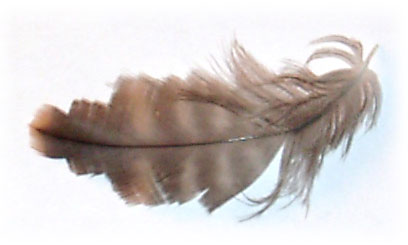 |
The feather should be smooth edged. Here the lighter portions have been eaten away by feather lice causing this feather to have "steps" along the edges. |
External parasites such as feather lice and hippoboscids are common. Hippoboscids have been described as looking like flying ticks. These can be treated with a topical treatment of 2% Sevin powder or a 0.03% Pyrethrins, 0.3% Piperonyl butoxide spray - any pet store caged bird spray will likely work. Apply once starting at the neck and working your way down, spray only lightly the beak, then reapply 7 days later. If you cannot spray the bird safely, spray a paper towel and rub that along the bird. Avoid spraying in areas where the spray would land that the bird would also eat off of, such as on a block perch on the gauntlet. Taking a few small precautions avoids these treatments from being ingested. Also you will likely want to treat for both internal and external parasites in an area that is not used for birds or people, and can easily be completely cleaned or avoided. Once the parasites crawl off or are flushed from the system, you don't want them infesting something else.
Parasites, like maggots, can also settle into the ear. This is not uncommon in wild birds, and can lead to death as they grow. One way to handle them is to flush the ear with mineral oil and the maggots should crawl out.
Internally parasites can attack any number of places. Air sac worms are not uncommon, but are not seen enough to readily be identified. Typically there is regurgitation, and some amount of weight loss, although symptoms can be very subtle until the bird succumbs. It is usually a good idea to fatten a bird slightly having her well fed and hydrated before treating for internal parasites. Worming a bird can can negatively impact a bird, particularly for heavy parasite loads. Having her in a slightly heavy and well fed state helps her handle the worming treatment.
Pneumonia
Pneumonia is often found as a secondary disease to Asper and sometimes when found separately they can be mistaken for the other. It has many primary causes including bacterial and viral.
Proper treatment for bacterial pneumonia is antibiotics, stress reduction, good food, and dark, quiet space. Viral pneumonia will require a similar regimen except instead of antibiotics aimed at the bacterial pneumonia, Baytril (or other antibiotics) is typically prescribed to prevent secondary bacterial infections.
Poisoning
There are many different types of poisons that raptors can be affected by.
Organophosphate There are over 36 different organophosphates in thousands of products in the US. Acute cases are not seen in live birds as these birds die immediately, typically by the hundreds. Chronic cases will be seen. Symptoms of this are the typical "sick bird," green mutes, twisted neck, laying down, and seizures. Immediately treat with Atropine (0.02 mg/kg), toxiban, and supportive treatment. If there are seizures, treat with Valium.
Carbamate These act like organophosphates, although there is a better chance of survival as carbamate bonds are slowly reversible. Treat with Atropine (0.02 mg/kg) and supportive care.
Organochlorides These are rarely seen in the US as organochloride use is not permitted here. However as they are still produced here and there may be private amounts still in storage, this could be seen. Treatment is supportive, but rarely is effective.
Metaldehyde This is the ingredient found in slug and snail bait and is most common in household pets. Almost no treatment is effective and euthanasia should be considered.
Rodenticides Rarely seen except in the occasional Barn Owl. This is usually easy to diagnose due to the bleeding into the chest cavity. Poking a needle into the chest and watching for the blood to seep out is a sign of this type of poisoning. Treatment is to induce vomiting and treat with Vitamin K for 4 - 6 weeks. If the blood seepage into the chest cavity is extensive, pressure may need to be released. Treatment for the poison should go for at least 4 weeks to ensure it has fully treated the entire system.
Lead See above listing for Lead Poisoning.
Carbon Monoxide Carbon monoxide poisoning can occur when the bird is in an enclosed space where exhaust fumes can enter, such as the back of a truck. Rust or holes in the area allow exhaust fumes to enter the area. Birds are highly susceptible and readily die from even a small exhaust entry. If a bird is suspected to have been exposed, getting her into fresh, clean air immediately is key. Don't leave her in her hawk box outside, but perch her outside and away from vehicles. Birds also are sometimes set in a hawk box near the back of a car not realizing the exhaust is flooding the bird, possibly poisoning her. Other scenarios are sometimes with certain garage setups or other locations where an exhaust system puts out carbon monoxide that we otherwise would not notice.
Teflon Teflon is in many homes and kitchens, but needs to be monitored by those with birds or raptors. Brand new pans with a new Teflon coating emit a gas when first heated, and Teflon coated pans emit this chemical when heated to around 450° which the birds then breathe in. This chemical doesn't do anything to us or many of our pets, but birds of all kinds are highly susceptible to this. Bird owners have accidentally left a Teflon pan on the stove on high only to later find their birds dead. If you are using a new Teflon pan, consider ventilating the area and removing the bird from the area.
Poultry Ticks Argasidae or soft ticks
These external parasites are quite tiny appearing just to be specks and can be difficult to see without magnification. Birds can be dusted with poultry dust, or any 0.25% Permethrin or other poultry preparation. Within an hour these tiny ticks will come crawling out, so treat in an area away from unaffected animals. These are also very difficult to get rid of once they infect an individual or a site. Birds can be treated internally as well with a 0.02% Ivermectin preparation. If left untreated, this will kill a bird.
Poultry Tick protocol courtesy of Bill Rhinehart, working with Linda and Dr. Joseph Chalk, San Bernardino County Raptor Rehab Center.
In horse country we can purchase (over the counter) Ivermectin paste for a horse wormer. It's 1.87% and about 6 dollars a tube. It will treat a 1250LB horse for worms and Bots. We get baby food in the jar. We use strained chicken. Gerber's makes good stuff.
Ivermectin does not mix with water, it suspends.
First mix it down to the proper strength.
Start with 1cc of 1.87% Ivermectin paste (approx 2.00%).
Take that 1cc of 1.87% Ivermectin paste and mix it well with 9cc of the strained chicken (now 0.20%).
Take 1cc of that 0.20% mixed combination and mix it again with another 9cc of the strained chicken (now 0.02%).
Use this 0.02% mix for oral treatment.
Use 1cc of this 0.02% mix for every kilo of bird weight. Put it on the bird's food (Quail, Rabbit, Mice, Rat etc).
Do this once a week for 3 weeks.
Pox (also called Avian Pox)
This slow spreading viral disease is easily transmitted through a number of vectors including contact with infected individuals, ingestion of infected individuals, and even contact with surfaces that infected individuals touched - it can be spread more quickly between individuals by mosquitoes. Be very careful if an infected bird has touched a mews, perch, or glove as these will need to be disinfected before another bird can touch them. The most common form causes warty bumps to appear on the cere, legs, mouth, and even around the eyes and the upper respiratory system. Eventually these growths will cause difficulty breathing or seeing. The three common strains which have been identified are fowl pox, pigeon pox, and canary pox.
Pox must be treated topically and a diluted mixture of Betadine is considered effective along with antibiotics for any secondary infections. Soaking or swabbing the affected areas with a cotton ball or Q-tip soaked in the solution and then dressing the area with an antibiotic balm such as Neosporin is an effective treatment for mild cases. More serious cases may require Betadine soaks, vigorous scrubs, and oral Clindamycin as well as pain and anti-inflammatory medication. Some have reported great success in washing the affected skin several times a day with organic apple cider vinegar. Continuing this treatment for 2-3 weeks washing the affected area, letting it air dry, and repeating several times a day has resulted in some pox turning grey, then black, and finally falling off and clearing up completely. A healthy diet and stress reduction are also necessary. More extensive cases may necessitate treatment by curette or cauterization, and are now being treated with laser surgery which has reduced recovery time significantly.
http://www.dvrconline.org/avianpox.html
Rickets
Primarily seen in young birds who are still building bone mass, this is caused by a deficiency in Vitamin D, Calcium, or Phosphorous. In breeders it will cause poor quality egg shells. Young birds with rickets walk with stiff legs, are slow to grow and have enlargements at the ends of long bones. Eventually they will develop bent or broken bones, seizures, heart disorders, and tetany. The worst cases end in paralysis and death.
A low calcium, high Phosphorous diet that lacks proper amounts of Vitamin D creates a state known as Hypervitiminosis D. Since birds can synthesize Vitamin D from sunlight and various precursors, birds with proper amounts of sunlight are far less likely to be as sensitive to the diet. Birds who do not receive the proper amount of sunlight will be more sensitive to not receiving the proper balanced diet. The stress here is balanced. A diet that is too high in Vitamin D will cause calcification of the organs.
Round worms or Ascarids
Roundworms are a parasitic infestation of the digestive system by a nematode, Ascarida galli. Typical signs of this disease are diarrhea, weight loss, and sometimes foul smelling mutes. There are many ways that a bird can get roundworms, and most birds in the wild have at least a low level infestation. If you are out hunting with your bird the chances are that it is exposed to these, either through rabbits or birds it is catching. After you trap and after you have ended the hunting season, it's a good idea to get to your vet for a check-up and have a fecal done to ensure your bird is not carrying worms. These are easily treated, and can cause a lot of problems from general condition and malaise at hunting to delaying a moult. The worms are sometimes found in the bird's mutes or castings. If reviewing your own fecal slides, this can be mistaken for Coccidia. Note that these are much bigger than Coccidia.
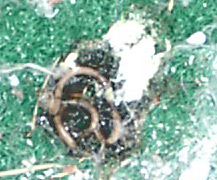 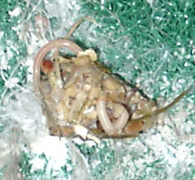 |
A roundworm in a mute and in a casting |
Roundworms are treated with Ivermectin, Panacur, Piperazinel, Piperazine, Thiabendazole, levamasole, or Nemex.
Seizures
Seizures are an affliction of the nervous system, although the initial cause may be from other sources such as metabolism.
Seizures are best dealt with by placing the bird in a cool, dark place and quickly getting them to a vet.
Sinusitis
This is a bacterial infection of the sinuses. It is most often diagnosed when the skin in front of the eye moves in and out as the bird breathes. In extreme cases the sinus can be nearly completely blocked with swelling of the orbital sinuses. The bird will have wheezing coming from the nares in this case. Typically treated with saline flushes of the sinus cavity and antibiotics.
Sour crop (also known as Crop Stasis)
Sour crop is a bacterial infection of the digestive system. A bird does not put over a crop into her stomach in a timely manner. The food that remains in the crop is warm and not treated with the stomach acids, so as it sits there the bacteria grows. The bacteria may be salmonella, in which case the bacterial growth can be very difficult to manage.
It can be caused by overfeeding, dehydration, improper feeding methods, rotten food, parasitic infections, ingestion of petroleum products, crop burns, crop lacerations, and even high temperatures or bright lights. It is marked by regurgitation of the crop contents, foul smelling breath or castings, loss of appetite, but increase in thirst. Birds that have not regurgitated their crop contents will need help to very carefully remove the contents and rinse the crop. It is essential to start sour crop treatment with removing all the matter that is breeding bacteria. Often falconers report that they left food on the counter all day to defrost, then noticed the bird develop sour crop. It is much preferred to defrost food quickly in warm water serving it as soon as it is defrosted. This warms the food, defrosts it quickly so that bacteria do not multiply as much, and replaces some of the water lost when the food was frozen helping to keep the bird hydrated.
Birds that are sick, weak, or stressed are less likely to be able to handle an over-full crop and therefore more likely to develop sour crop.
Mild sour crop can be treated with Pedialyte directly into the crop and a small amount of Pepto Bismal or Kaopectate. Any hydrating fluid will help hydrate the material in the crop and encourage her to throw it up flushing the crop out. If there is no improvement within 8 hours, a veterinarian is required. This is an emergency requiring veterinary assistance. Treatment routine may include emptying the crop, flushing with sterile water, and treatment with an antibiotic such as 50 - 60 mg of Amoxicillin twice a day for several days. Birds need to be kept warm, dry, and calm to fight off the bacterial infection. Full recovery may take a couple weeks. Watching her mutes throughout will let you track the progress of her GI tract recovery.
Stargazing (sometimes called Twirling or Ataxia)
Stargazing is an affliction of the nervous system, particularly inflammation of the brain, stemming from nutritional deficiencies (primarily Vitamin B1 or D3), metabolic problems, or poor management. The nutritional deficiencies themselves may be stemming from another disease or affliction or may be due to the particular diet the bird is eating. Typically the muscles to the sides of the neck will be contracting causing a twitching and twisting if they contract singly, or pulling the head directly back pointing the beak to the sky if they contract together.
Stargazing's effects can be reversed with sunlight and Vitamin B1 (thiamine) and a whole food diet with proper supplements, although if another disease is causing the bird to not create or process vitamins, then that must be identified. Frequently a poor diet consisting solely of fish or organ meats will cause this. Birds fed fish must be considered for thiamine supplements, especially if the fish is not absolutely fresh. Thiamine deficiency, lack of B1 in the diet, can also come from only feeding muscle meat. This will also tend to present a bird with floppy feet and seizures. Valium can be used to treat the seizures, and thiamine can be given IM.
Similar symptoms to Stargazing will be seen in birds with head trauma. This is typically referred to as Torticollis where the bird displays the "upside-down" head posture with some amount of spasm or twitching. Some of these may be treatable, but others are irreversible effects of trauma. Seizures should be treated with Valium.
Tapeworms
Tapeworms are a parasitic infestation of the digestive system. Symptoms include diarrhea, weight loss, and general malaise. If worms are seen in the mutes and they are moving, then they are more likely to be tapeworms. Roundworms are not usually alive when they pass through the bird. Tapeworm segments tend to stand straight up when they pass through appearing like tiny grains of rice or cucumber seeds in the mute.
Tapeworms are typically treated with Droncit, hexachlorophene, or Butynorate.
Torticollis (sometimes called Wry Neck)
Torticollis is typically a symptom of another disease. It is an affliction of the nervous system stemming from a variety of problems including trauma to the head, heat stroke causing nerve damage, West Nile Virus, or a variety of other diseases and shows similar symptoms to Stargazing in that the head is held in an odd position. Unlike Stargazing, the head may be twisted forward and bent up as if looking forward, but upside-down. Other behaviors may include walking in circles instead of a straight line.
The effects of Torticollis can be lessened with Metacam (meloxicam typically used at 0.5 per kg), vitamin B, and NSAIDs such as aspirin, although there are many irreversible forms of this.
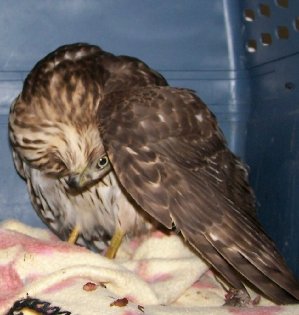
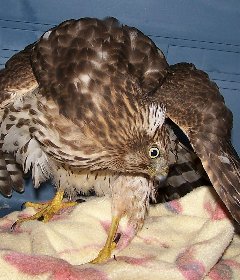
Torticollis in a Coopers' Hawk - on the top is before treatment and on the bottom is after being treated with Metacam (meloxicam). Photo courtesy of Linda Huff.
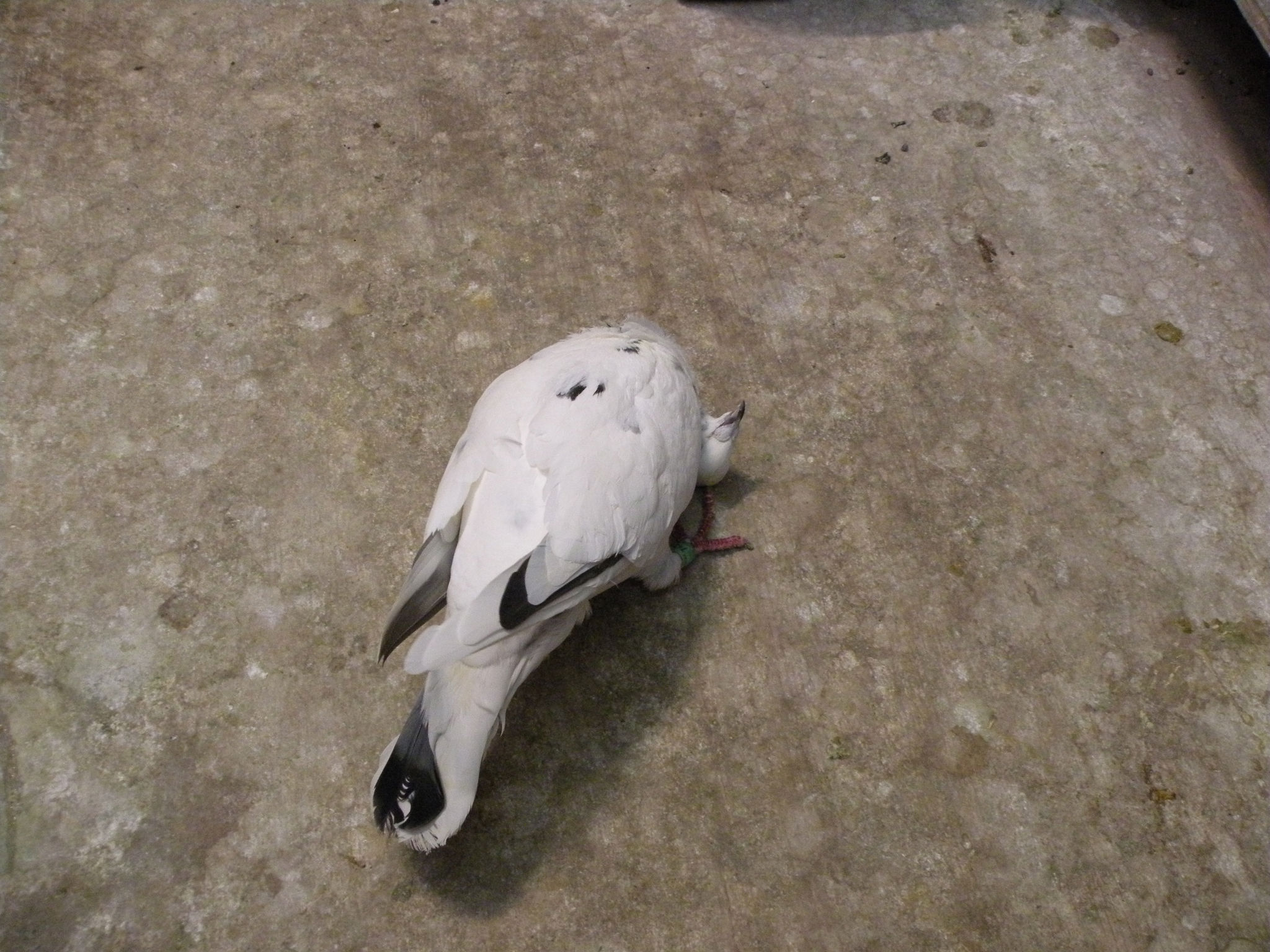
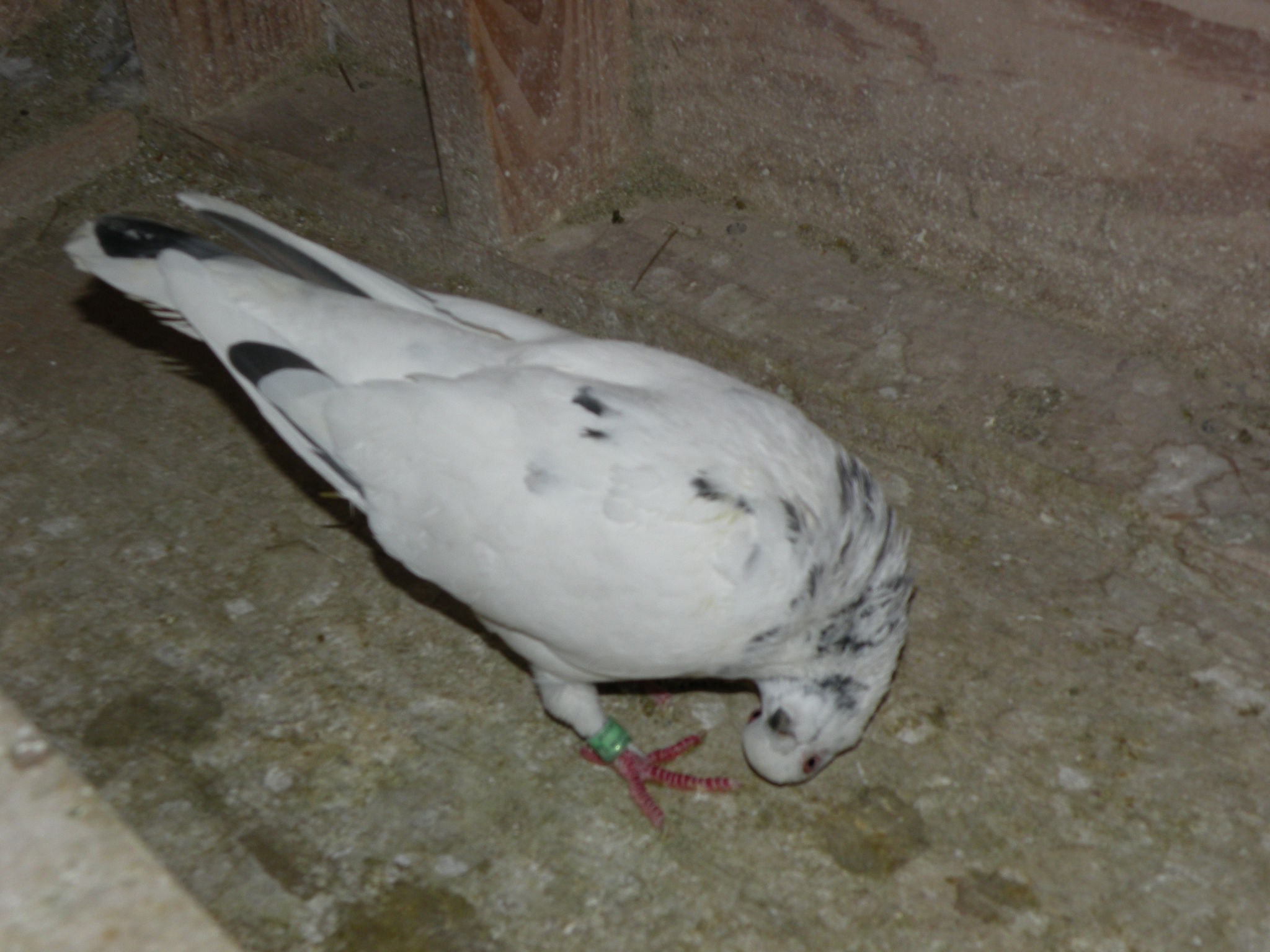 Torticollis in a pigeon.
Photos courtesy of KC Stegbauer.
Torticollis in a pigeon.
Photos courtesy of KC Stegbauer.
Tuberculosis
Avian tuberculosis is caused by Mycobacterium avium, which can infect people with suppressed immunities. The tuberculosis granulomas can infect the gastrointestinal tract, liver, or spleen and cause white plaques which may be visible on x-rays, otherwise the organ would have to be aspirated to detect. Other symptoms are elevated white blood cell count and increased liver enzymes. Avian TB can also create external lesions which appear similar to Avian Pox, but will not respond to the same treatment. Usually by the time external lesions are seen the damage to the internal organs is significant and symptoms are very apparent. Although this can be treated with Banacol, it is not highly successful.
Uropygial Gland Infection
While not common, the uropygial gland, or preen gland, can become infected sometimes seen with a cheesy substance coming out of it. This may come from a combination of long-term illness, lack of exposure to sunlight, lack of preening, and overall poor condition. Warm compresses, flushing it or expressing it daily, antibiotic ointment, and exposure to good sunlight will help clear up an infection, even within a week.
West Nile Virus
West Nile Virus is a disease spread by mosquitoes. Some falconers are able to screen in their mews thereby reducing the mosquito population that is able to get to their hawks. Others have vaccinated their hawks with the equine vaccine.
The symptoms of this disease are loss of interest in food, weight loss, listlessness, weakness, fever, sleeping and, in highly progressed cases, tremors or seizures. Also frequently seen are squinting (one or both eyes), head tilt, staggering, shuffling, inability to focus, nasal discharge, voice change (due to the paralysis setting in the throat), and spookiness. As more falconers and rehabbers have observed birds with WNV, some more experiences and insights have been shared. There is some observation that different species of birds may present with different clinical symptoms. As an example, some say that Great Horned Owls display more neurological symptoms than Red Tailed Hawks. Absolute diagnosis is through a serology panel.
One result of WNV that I have not seen in conventional literature is malformed feathers in the moult after recovery from a WNV infection. This photo was taken by another falconer who noticed the malformed feathers growing in on his bird. Another noted effect is localized paralysis or palsy making fine motor movement difficult. Some birds have been described as appearing hypoglycemic or drunk with their head hung down, eyelids drooping, wings open slightly for balance, difficulty swallowing a piece of meat or difficulty ripping a piece of meat. This may appear suddenly almost as a seizure then pass leaving the bird acting normally, or it may persist in a mild form. It may present as the raptor's voice has changed due to paralysis in the throat. If this is observed, it might be worthwhile to test for WNV to see if this could be caused by the after effects of the disease. It is entirely possible that a bird came through a WNV infection without presenting substantial symptoms only later showing impact from it.
The feather on the left was moulted normally prior to contracting West Nile Virus. The feather on the right was dropped shortly after growing in. The feather on the right is substantially shorter than the normal feather and the shaft is warped and twisted.
Feathers courtesy of Ron Kearney.
There is no one identified procedure for guaranteed recovery. General care is fluids, warmth, and good nutrition as well as non-steroidal anti-inflammatories such as Metacam, Meloxicam (some increase the dosage for WNV to 1.0 per kg SID), Banamine, or Celebrex. Vitamin B1 is sometimes also given to help support the bird's immune system. Necropsy of kidney or brain tissues will confirm the virus.
https://www.animalgenetics.us/Avian/Disease_Testing/Disease-Index.asp
Wingtip Edema
Also known as Dry Gangrene Syndrome. Normally seen in young (less than 2 years old) desert climate birds such as Harris' Hawks being tethered at flight weight in cold weather (not necessarily freezing). It is believed to be a circulatory disorder. Although exact causes are not known, there is a direct correlation with low weight, low amounts of exercise, and cold temperatures. There is also a theory that these desert birds are being over-hydrated through their food source and are not able to properly flush that amount of water from their system under these circumstances.
Most commonly seen in the UK, the birds display a significant swelling at the wing tip. Treatment is to warm the bird gently, encourage the bird to exercise the wings to encourage circulation, and a broad spectrum antibiotic.
Note: When using Aureomycin products to on your birds, you should skip any calcium supplements you have been giving.